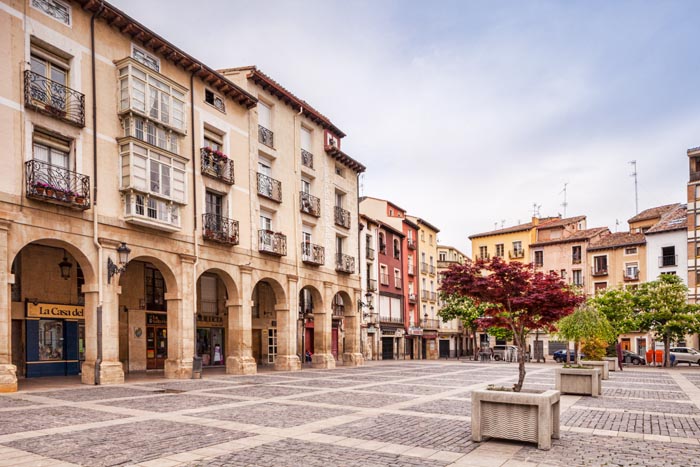
Next stop Logroño, a quiet little town in the La Rioja wine region. Quiet, that is, apart from the campsite, which must have been the noisiest of the trip.
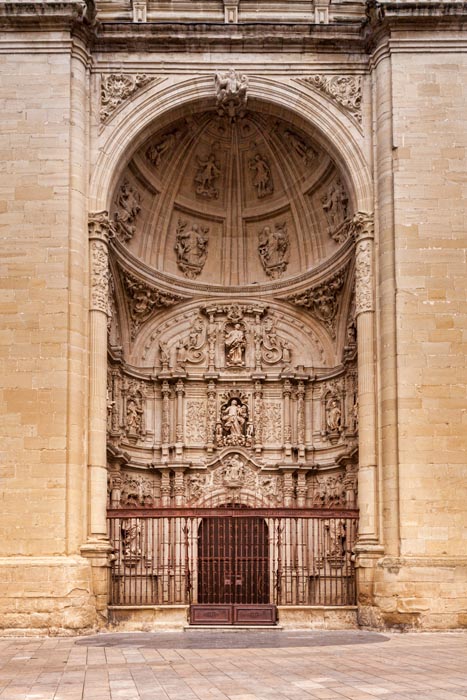
The west door of the Cathedral in the plaza above.
The town is on the Camino de Santiago, the thousand-year-old pilgrimage route to Santiago de Compostela, so there are lots of pilgrims passing through.
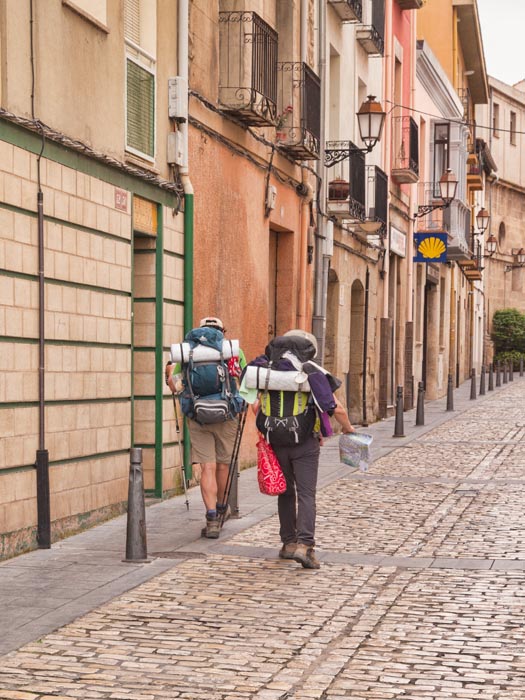
The scallop shell emblem is the marker for the route, and appears all over the place.
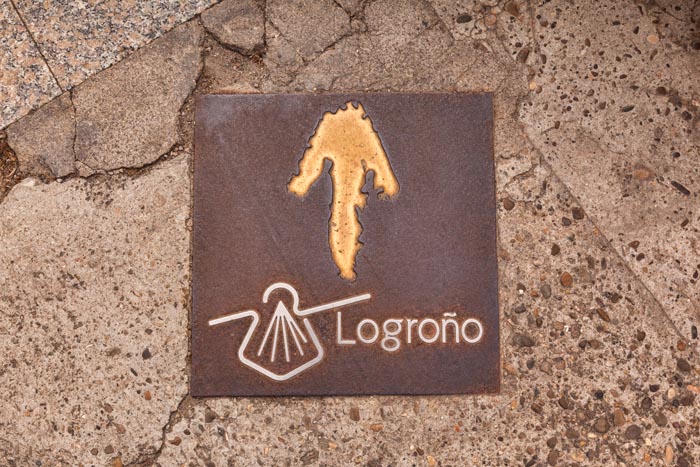
This is a pavement waymark.
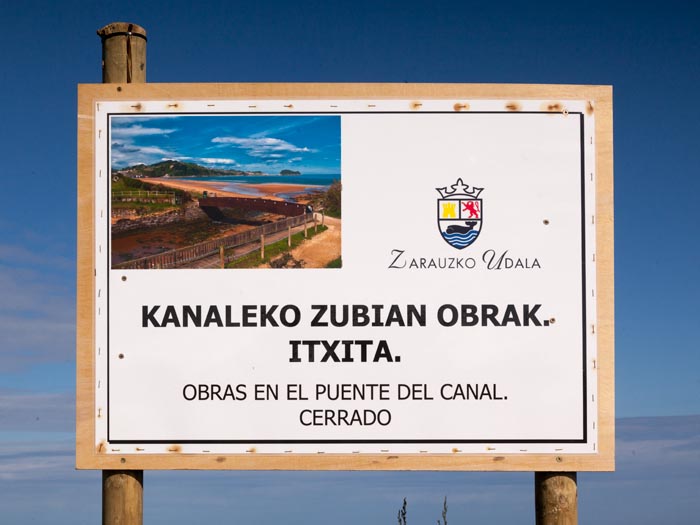
We got to the coast of the Bay of Biscay at Zarautz, and found a bit of a language problem. This is the Basque Country, and the locals don’t always provide Spanish translations on signs. We can usually figure out what Spanish notices are saying, but the Basque language isn’t related to anything else on earth. Fortunately, most people in the tourist business have enough English to get things done.
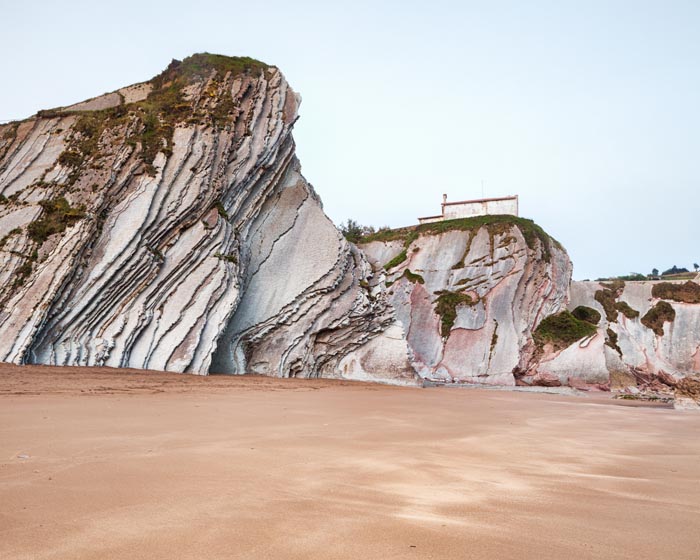
The next town along the coast, Zumaia, is famous in geological circles for its ‘Flysch’ formations, particularly at Itzurun Beach.
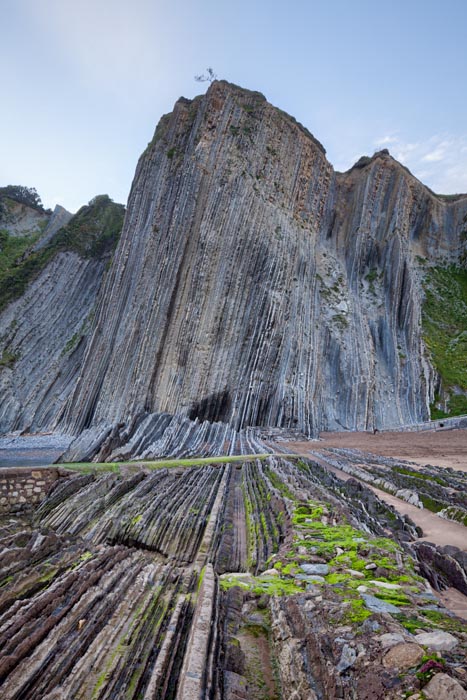
Along the cliffs here, you can see 100 million years of history, stacked on end.
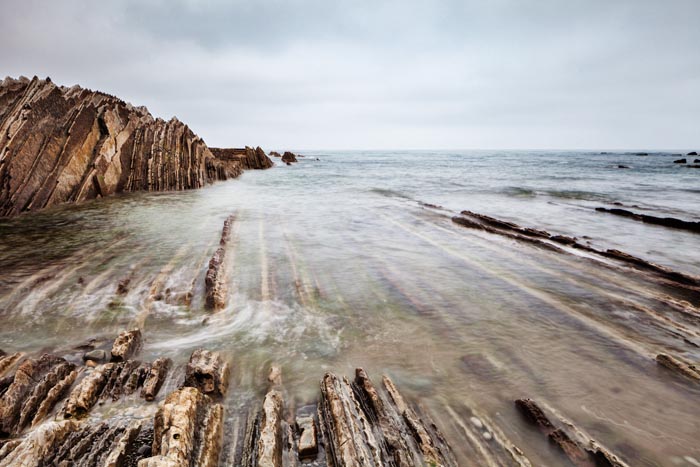
The rocks are also attractive and make interesting photos.
We are now at Sopelana, about 20km from Bilbao. We had a look around the city yesterday. The main tourist draw is the Guggenheim Museum and its surroundings.
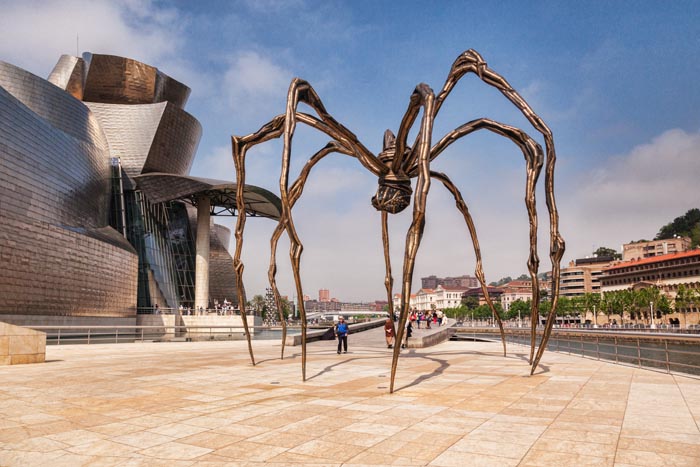
You wouldn’t want to find that in your bath, would you?
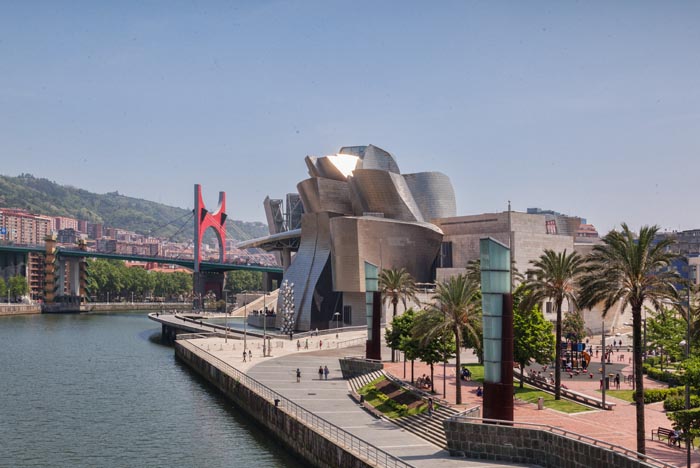
The Guggenheim Museum.
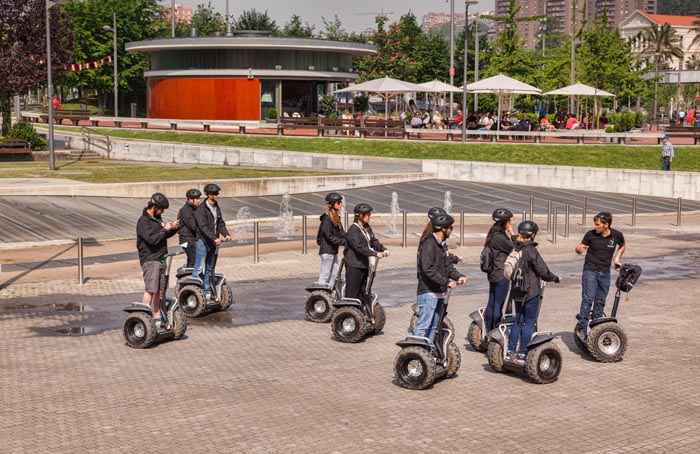
There were several groups on Segways around the museum.
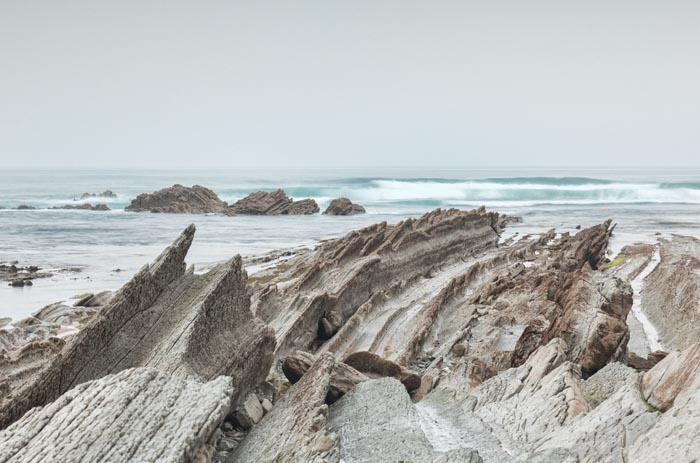
Our local beach also has Flysch type formations, but the weather has not been cooperating.
Tomorrow we catch the ferry from Bilbao to Portsmouth, a 24 hour trip, and back to Yorkshire on Saturday. We have some more bits and pieces to post, so keep watching!
I thought that the Guggenheim museum was in the US so was very surprised when you posted you had been for a look!
Of course, I had to look it up and found that there are Guggenheim Museums (plural). It’s actually a foundation. There are also Guggenheim museums in New York, Venice and Abu Dhabi.
Looking forward to the next post 🙂
Love Vic
Why are the people on Segways all wearing the same jacket? Is it a low-vis safety jacket?
We didn’t go in the Guggenheim as we are feeling rather jaded, after 16 weeks of looking at stuff! We can only take so much culture. Would love to go back there sometime and have a look inside. I didn’t know they were in Abu Dhabi and Venice – you can see the the Abu Dhabi one is by the same architect, can’t you?
I get the feeling Frank Gehry’s brief was, “Outdo what you did in Bilbao”. It ends up looking like a heap of tubes of aluminium foil mixed up with cardboard boxes. Shame, as I really like the one here. I don’t know if we will ever visit Abu Dhabi to find out out what it looks like in real life.
Just checked Wikipedia, it isn’t built yet, so those pics are 3D renders. They often look a bit strange, so there is hope yet! Looks like it will be positioned out in the sea, like the Sydney Opera House.